
How Delta Strike Fixed Their Data 'Splinter'
Delta Strike needed to overhaul its aging data infrastructure to support its position as a global leader in laser tag technology. They moved from static servers to a serverless microservices architecture, ensuring they only pay for the exact resources consumed during active data processing.
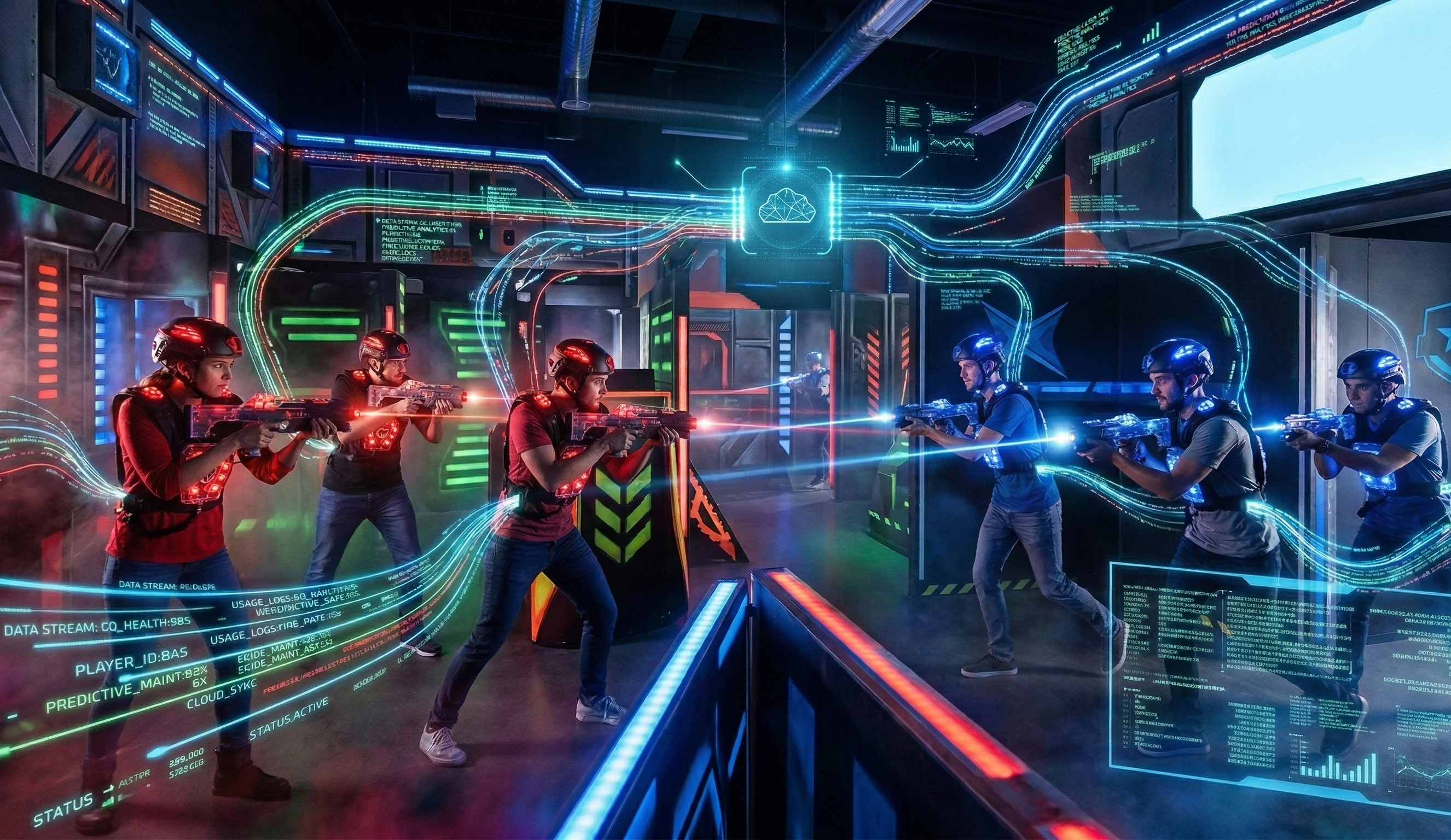 For a global leader in laser tag, Delta Strike’s technology should feel like the future. But behind the scenes, their data infrastructure had become a ‘splinter in the mind’. It functioned, sure, but it was noisy, expensive, and increasingly stiff.
Evolution of Delta Strike Data Strategy
Delta Strike needed to overhaul its aging data infrastructure to support its position as a global leader in laser tag technology. The original system relied on legacy on-premise servers and inefficient data processing methods that struggled to scale with the company growth. These always-on virtual machines were significantly underutilized and remained idle 80 percent of the time while incurring constant costs for unused digital floor space. By transitioning to a modern serverless IoT platform Delta Strike has completely transformed its equipment management and analytics capabilities.
Modernising the Infrastructure
The core of this transformation involved moving away from static servers to a serverless microservices architecture which ensures that the company only pays for the exact resources consumed during active data processing. The team also reimagined the laser tag hardware as a true IoT network. Instead of relying on local databases to act as a middleman, equipment usage and maintenance data now flow directly from the hardware to the cloud. This direct pipeline allows for more granular reporting on equipment health and opens the door for advanced predictive analytics.
Data Reorganisation and Optimization
To improve performance the system migrated to a modern MySQL 8.0 schema which successfully separated static technical hardware logs from dynamic game data. A smart partitioning strategy was implemented to sort data by location and time. This shift turned massive global data searches into targeted queries and drastically reduced the time required to generate insights.
Quantifiable Results
The move to a serverless IoT platform delivered immediate and measurable improvements to the bottom line and operational efficiency. The elimination of idle server time resulted in an 80 percent reduction in wasted cloud compute capacity. System performance increased by 65 percent as modern schema updates provided significant boosts over outdated MySQL versions. Data retrieval speeds improved by 90 percent moving from lagging queries to near real-time results even when processing massive datasets. Security was also enhanced by 100 percent regarding data segregation by separating sensitive customer information from hardware logs to minimize potential error impact. With this new foundation Delta Strike now possesses a fast and modern platform ready for predictive maintenance and high-level global analytics.
Frequently Asked Questions
Delta Strike transitioned from always-on virtual machines to a serverless microservices architecture. This shift eliminated expenses for idle server time and ensured they only paid for resources during active data processing.
By treating laser tag hardware as a true IoT network, Delta Strike enabled equipment data to flow directly to the cloud without local database intermediaries. This streamlined pipeline provides more granular reporting and creates a foundation for advanced predictive analytics.
Migrating to serverless allows a company to move away from underutilized hardware that may sit idle 80 percent of the time. This modernization reduces the digital floor space costs associated with legacy infrastructure while significantly increasing operational flexibility.
Delta Strike implemented a smart partitioning strategy that organized data by specific locations and timeframes. This turned broad global searches into targeted queries, allowing the system to return answers in near real-time even when crunching massive datasets..
Transitioning to a cloud-based IoT platform allows equipment usage and maintenance to be reported directly from the hardware. This real-time data flow enables predictive insights that help prevent hardware failures before they interrupt the customer experience.